A workshop floor takes almost everything that damages concrete: oil, brake fluid, battery acid, point loads from jacks, and tyres turning on the spot. Bare concrete soaks all of it up, and the stains never fully go.
What floor suits a workshop? A coating that does not absorb oil and vehicle fluids, thick enough to take jack and lift loads, anti slip in the wash bay, and marked so the working areas are clear.
What damages a workshop floor
- Oil and lubricants. Soak into concrete, leave permanent stains and make the floor slippery.
- Brake fluid and battery acid. Brake fluid softens some floor paints, and battery acid is acidic.
- Point loads. Jacks, axle stands and lift feet bear down on a very small area.
- Hot tyres. Tyres fresh off the road can lift a weak floor paint. Two-part epoxy resists this far better.
The usual systems
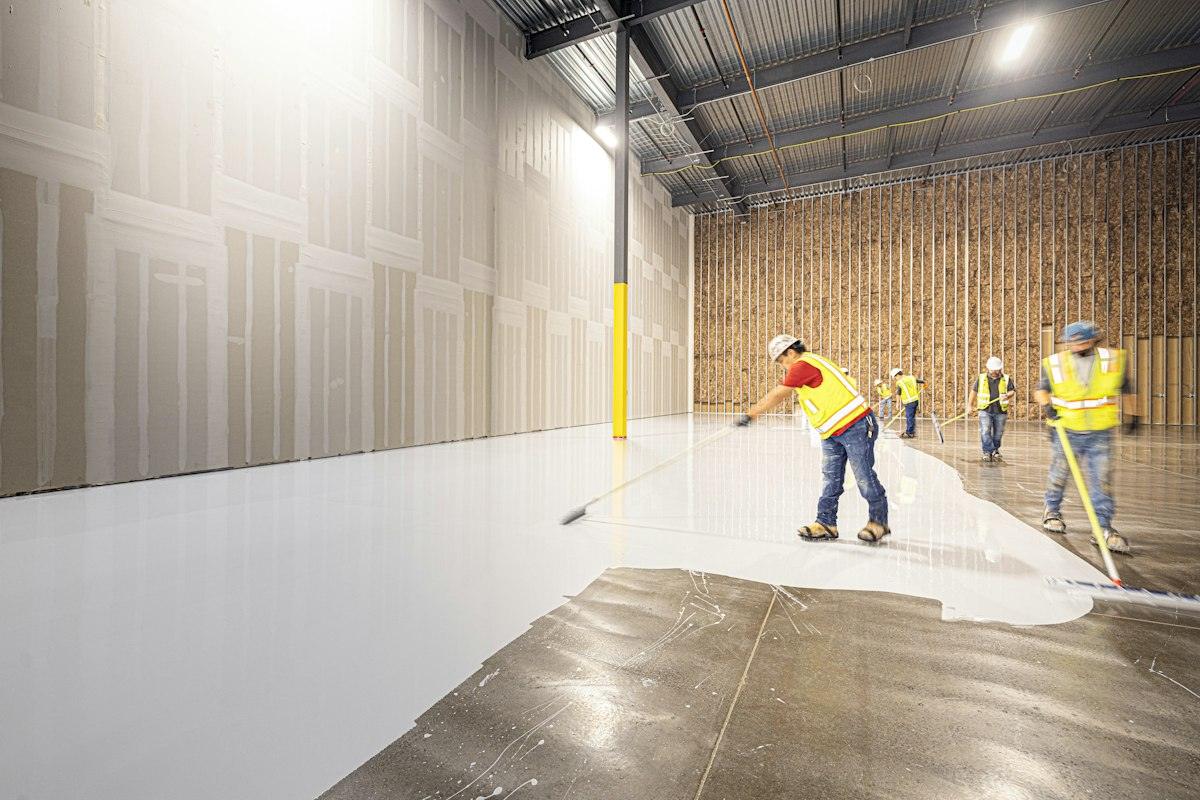
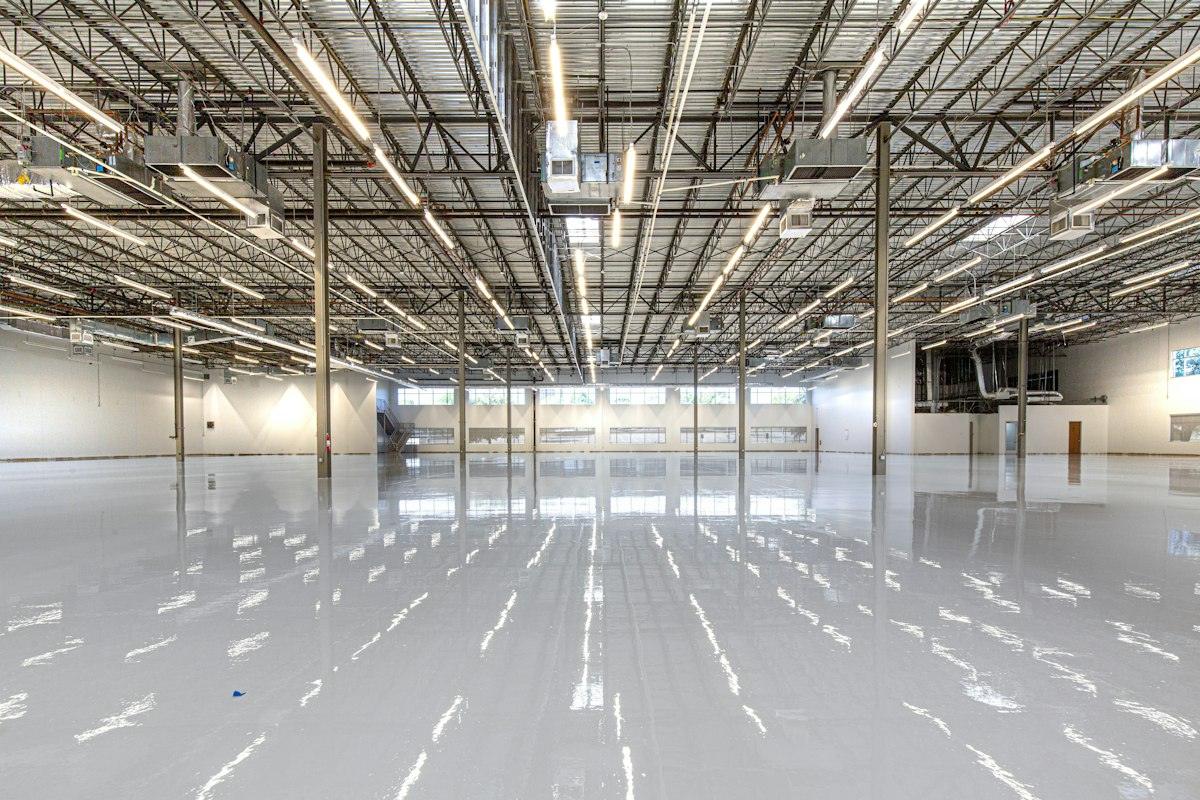
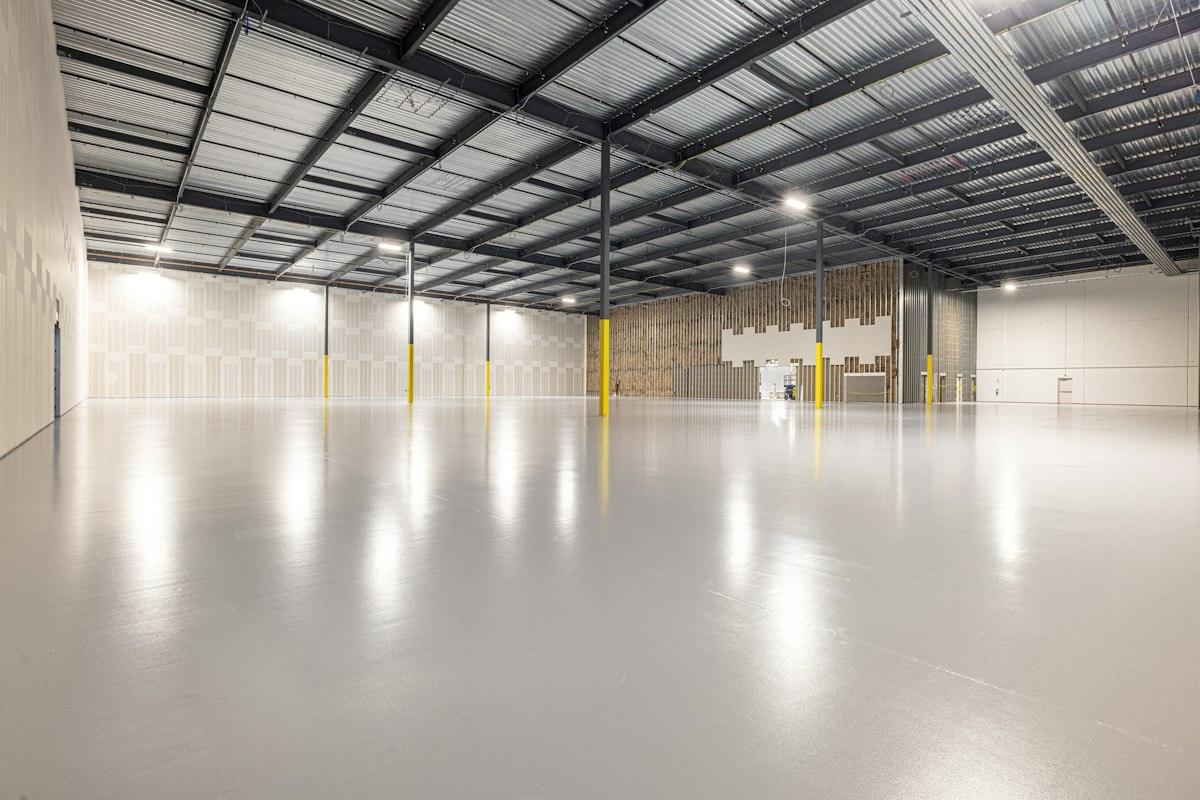
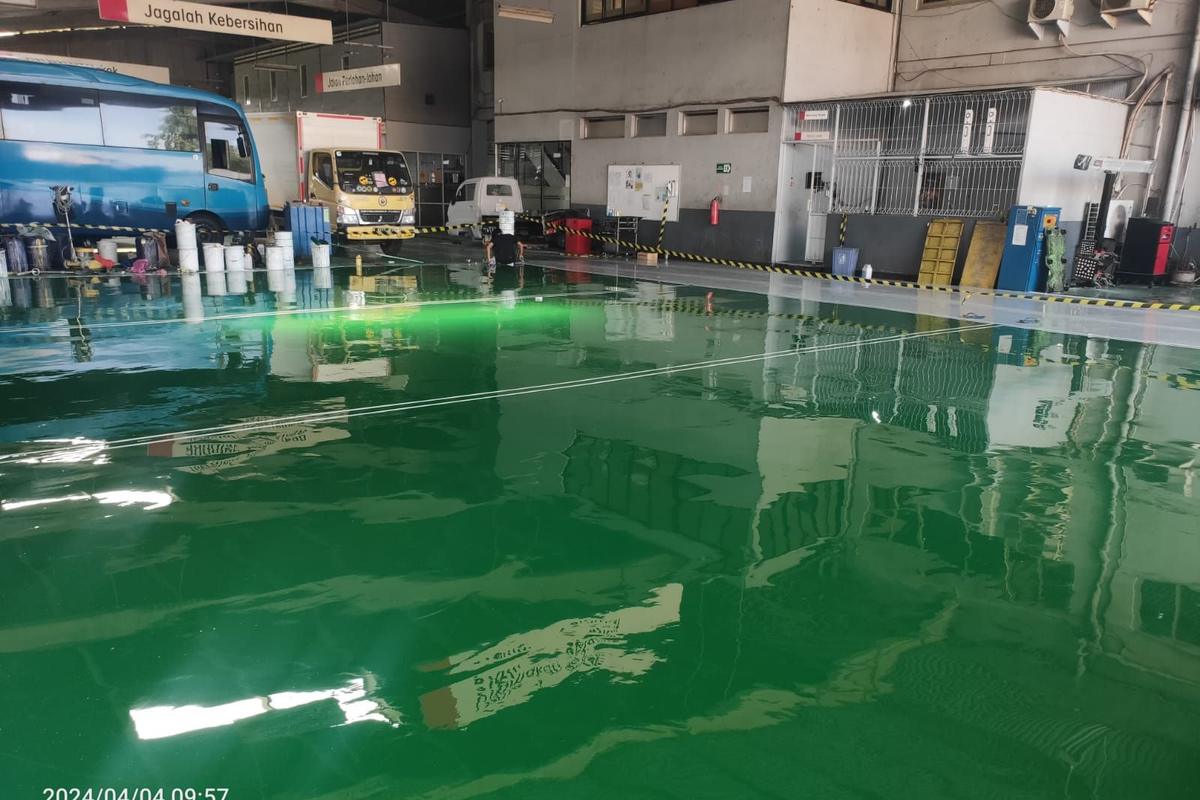
Service bays usually get a fairly thick epoxy, often self levelling, to take point loads and wipe clean of oil. Wash bays get an anti slip texture because they are always wet and soapy. Showrooms usually go for a light, glossy colour, because the floor is part of the backdrop for the cars on display.
Markings and safety
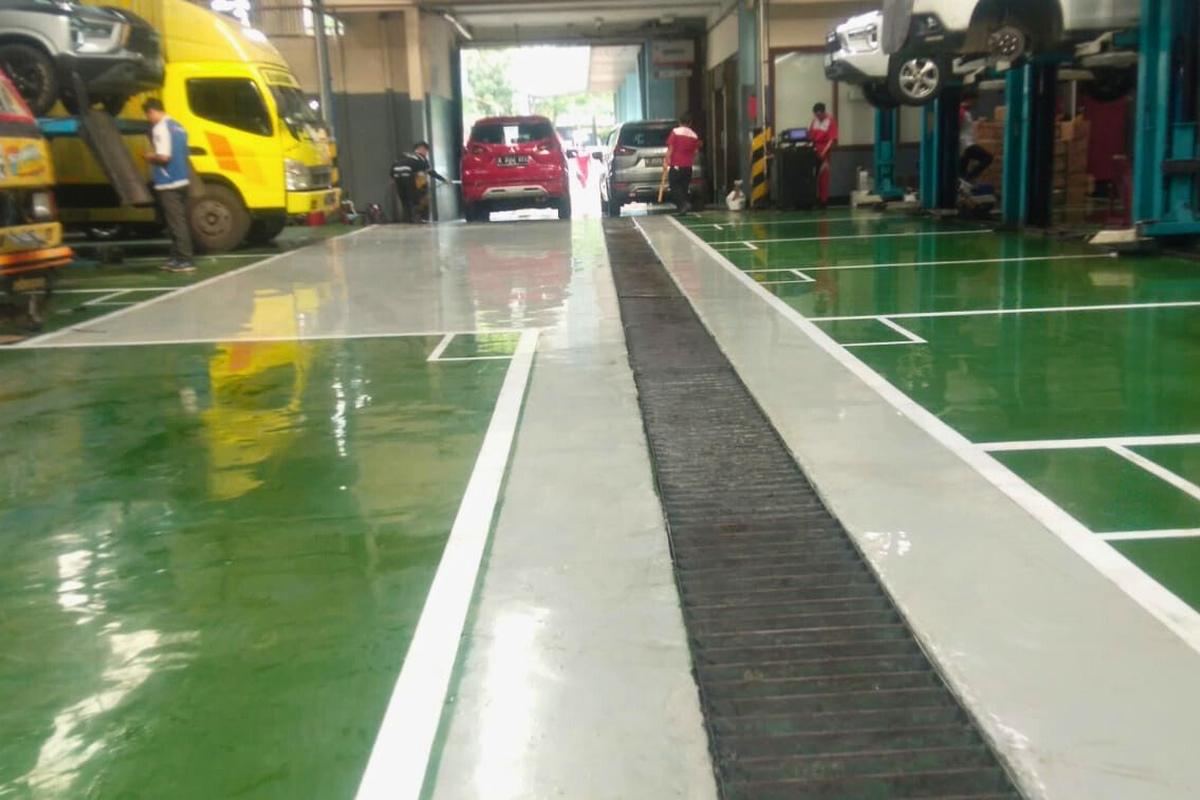
Floor markings divide the space into work bays, vehicle lanes, walkways and hazardous material zones. Consistent colours let mechanics and customers read the space without extra signs. Markings that are part of the epoxy system also do not fade the way ordinary paint does.
Looking after a workshop floor
Clean up oil and brake fluid before they dry, use absorbent for large spills, and avoid strong solvents for cleaning. The floor under lifts and along the vehicle entrance wears first, so check those areas first when planning a recoat.
Mella Paint has installed workshop and automotive floors for Lautan Berlian (Mitsubishi), PT Salindo Berlian Motor (Mitsubishi) and Terang Parts Indonesia.A selection of projects