The first question at almost every survey is how long. The answer is rarely about how many people are on site. What sets the schedule is the state of the slab, the coating system, and the wait each layer needs to harden.
How long does an epoxy floor take? It is counted in working days per zone: surface preparation, primer, the main coat, then cure. As a reference from our projects, 2,000 to 2,700 m2 took 15 to 21 working days.
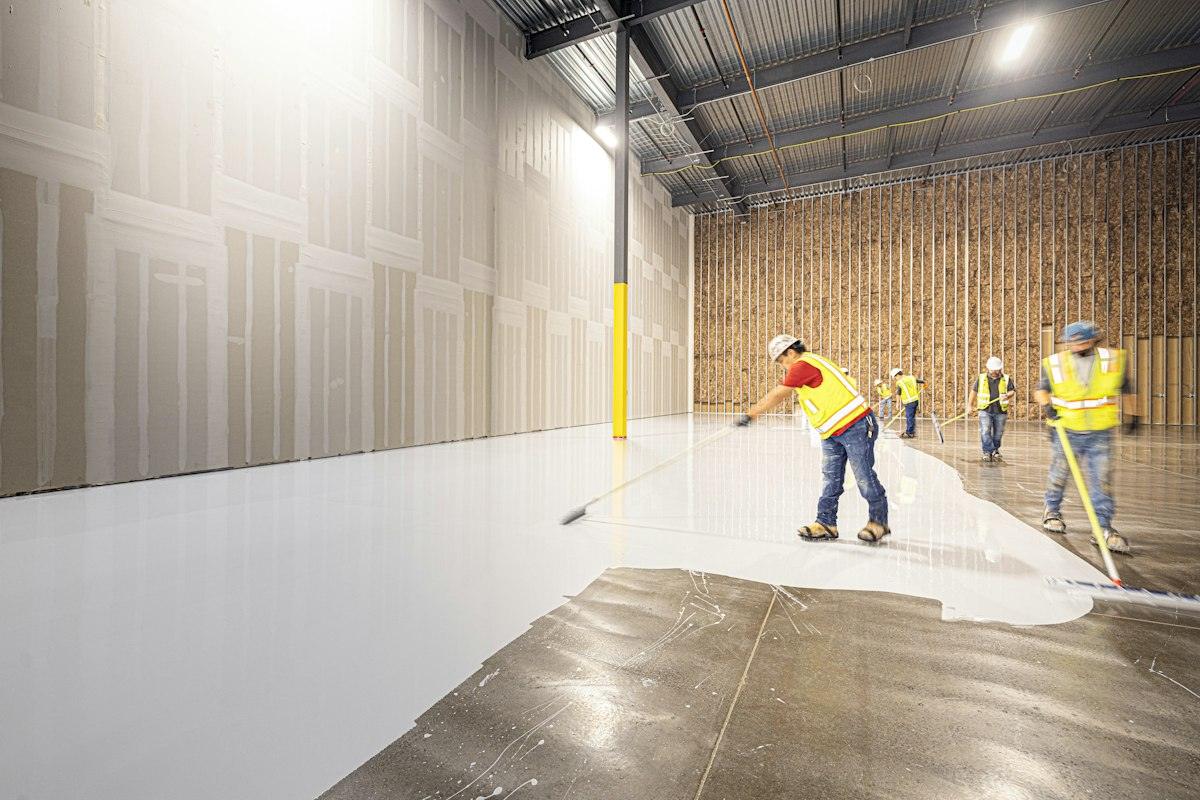
A sequence that cannot be rushed
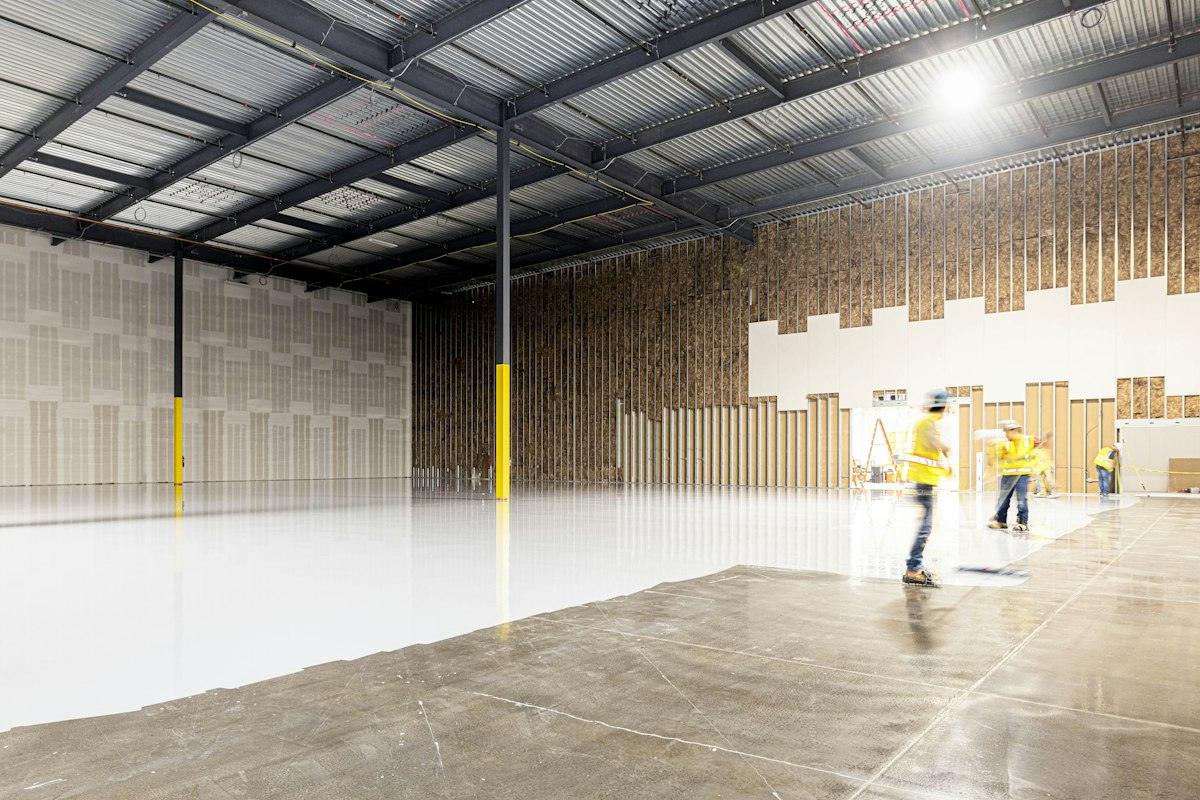
Every epoxy system follows the same order. The slab is ground to open its pores and remove the weak surface layer. Cracks and holes are filled. Primer goes down and is left to harden. Only then comes the main coat, roller coating or self levelling, and a top coat where the specification calls for one.
Each layer needs time before the next. At Jakarta room temperature the next coat can usually go on after 12 to 24 hours, depending on the product. That wait is why a schedule cannot be compressed just by adding people.
Factors that set the schedule
- Area. Decides how many working days each layer takes, and how many zones can be worked in rotation.
- Slab condition. Cracked, porous or previously coated concrete needs more repair and grinding before primer.
- Coating system. A roller coating goes down faster per metre than self levelling several millimetres thick.
- Cure time. Epoxy is usually walkable about 24 hours after the last coat, ready for light vehicles after about 3 days, and fully resistant after about 7 days.
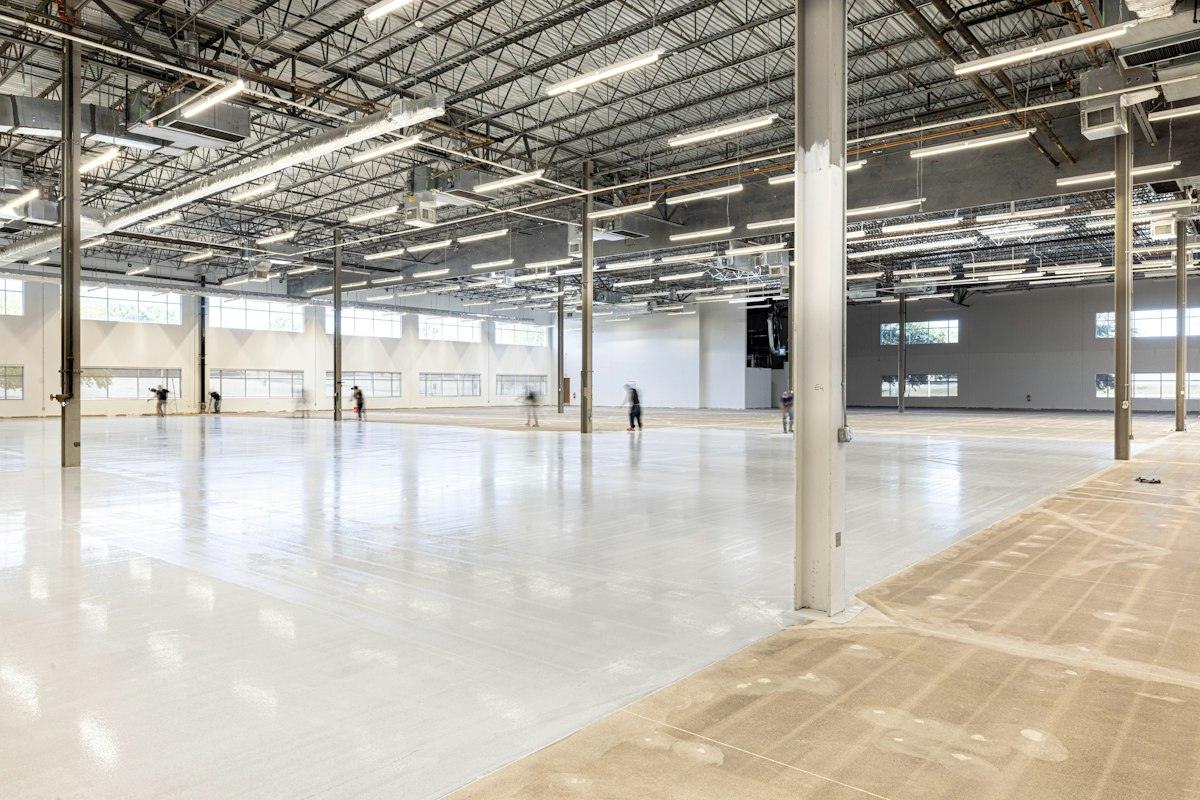
- Access and working hours. Areas that stay in use are worked zone by zone or outside operating hours, which lengthens the total.
What finished projects looked like
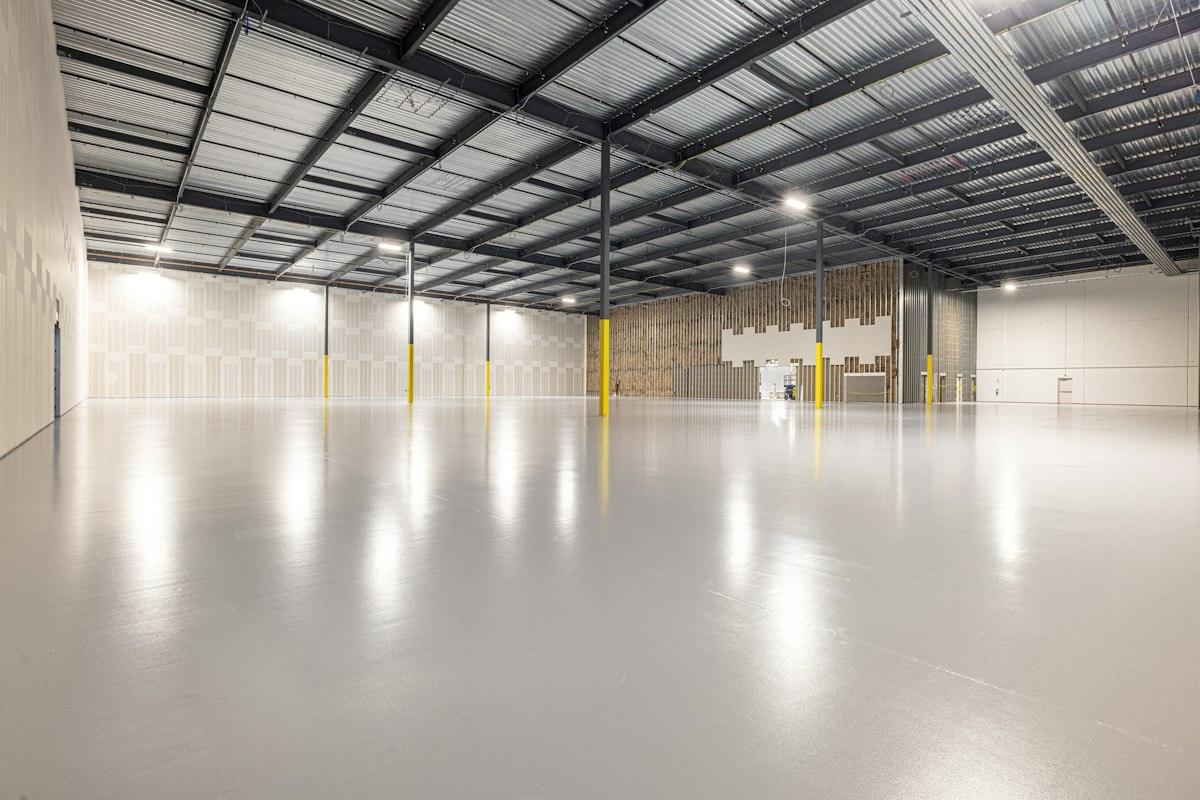
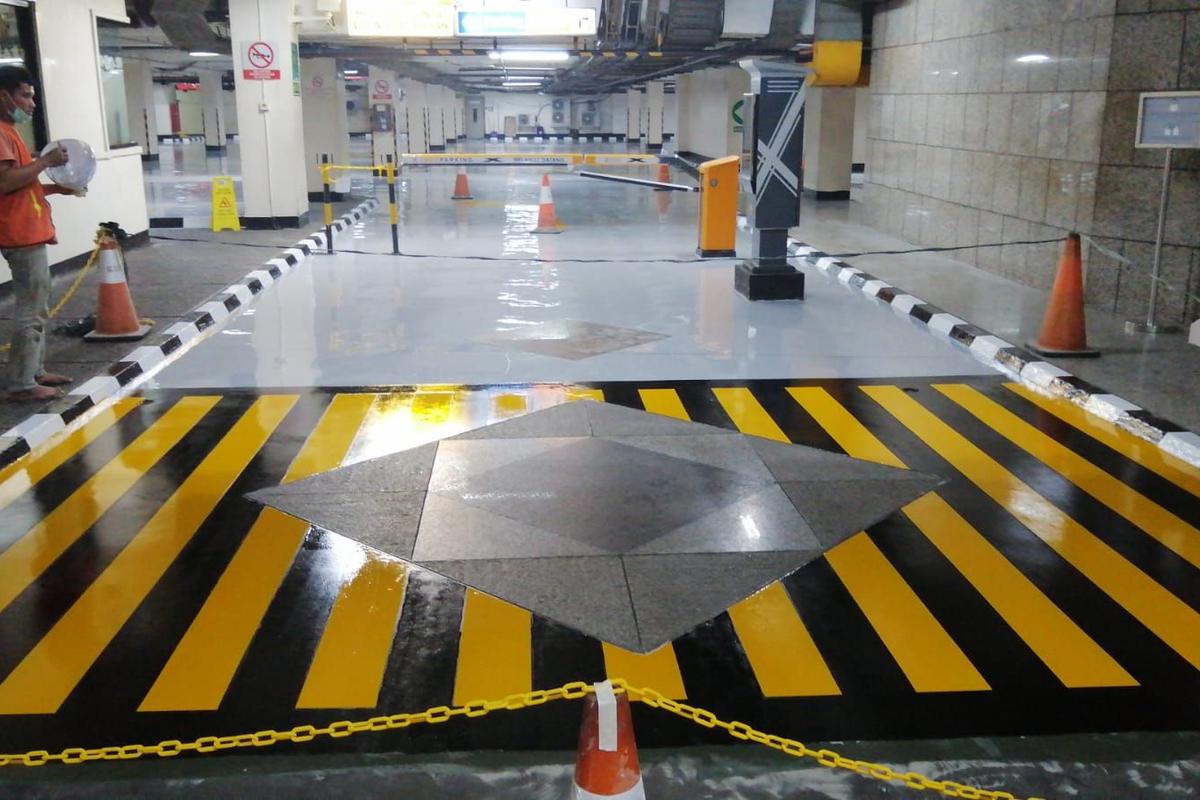
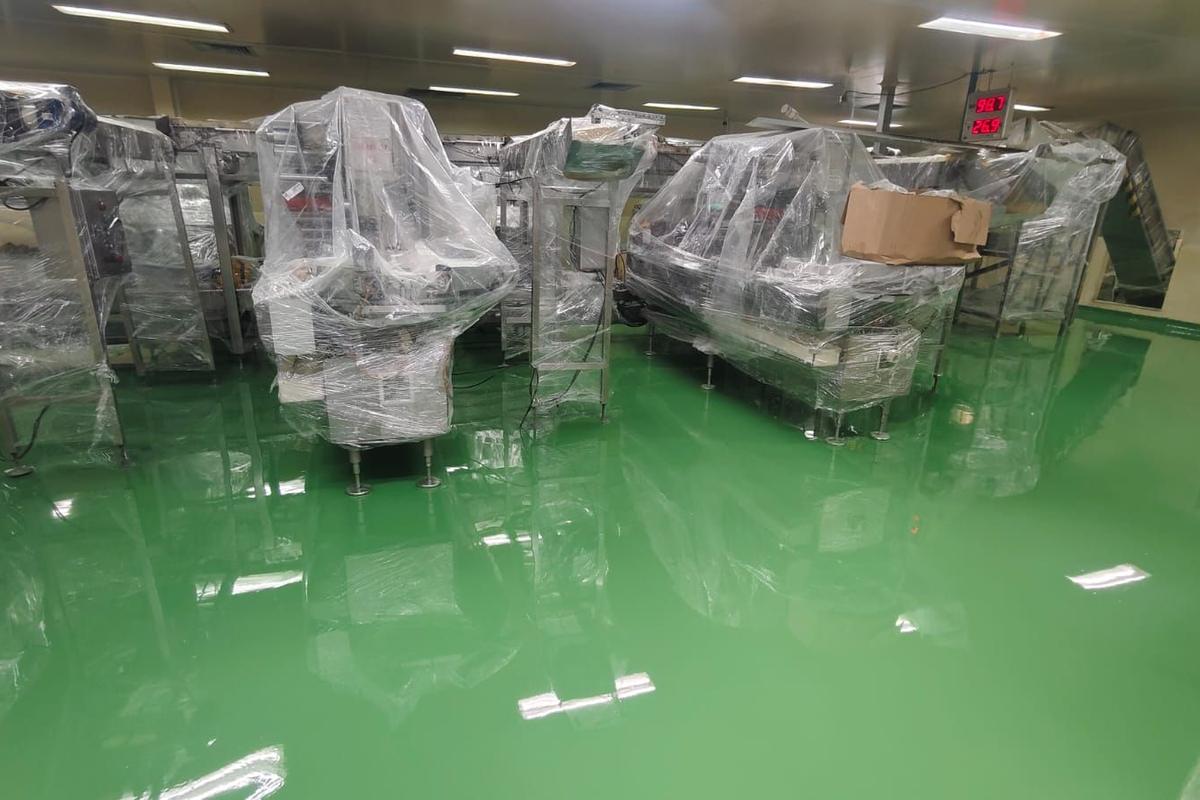
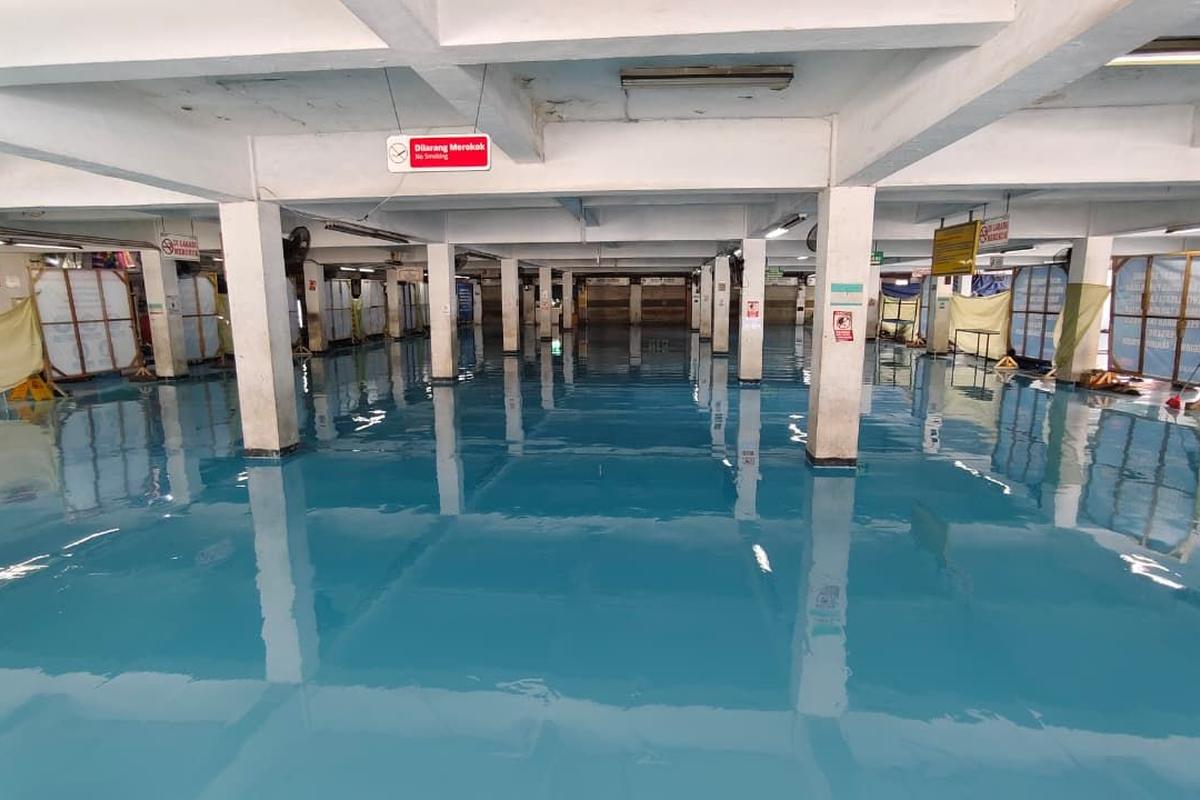
Three of our projects with full records give real numbers. A 2,000 m2 factory floor for PT Mayora Indah took 21 working days, worked zone by zone because the plant kept running. A 2,700 m2 car park for PT Supermal Karawaci took 15 working days. A 4,000 m2 Pelindo warehouse at Tanjung Priok took 30 working days, because serious concrete cracking had to be repaired first.
All three used a self levelling system. The difference in duration came from slab condition and access, not from area alone.
How to get a firm schedule
A schedule you can hold us to comes after a survey. Our team measures slab moisture and flatness, checks any old coating, and notes the access hours available. That produces a zone-by-zone schedule in the written quotation.