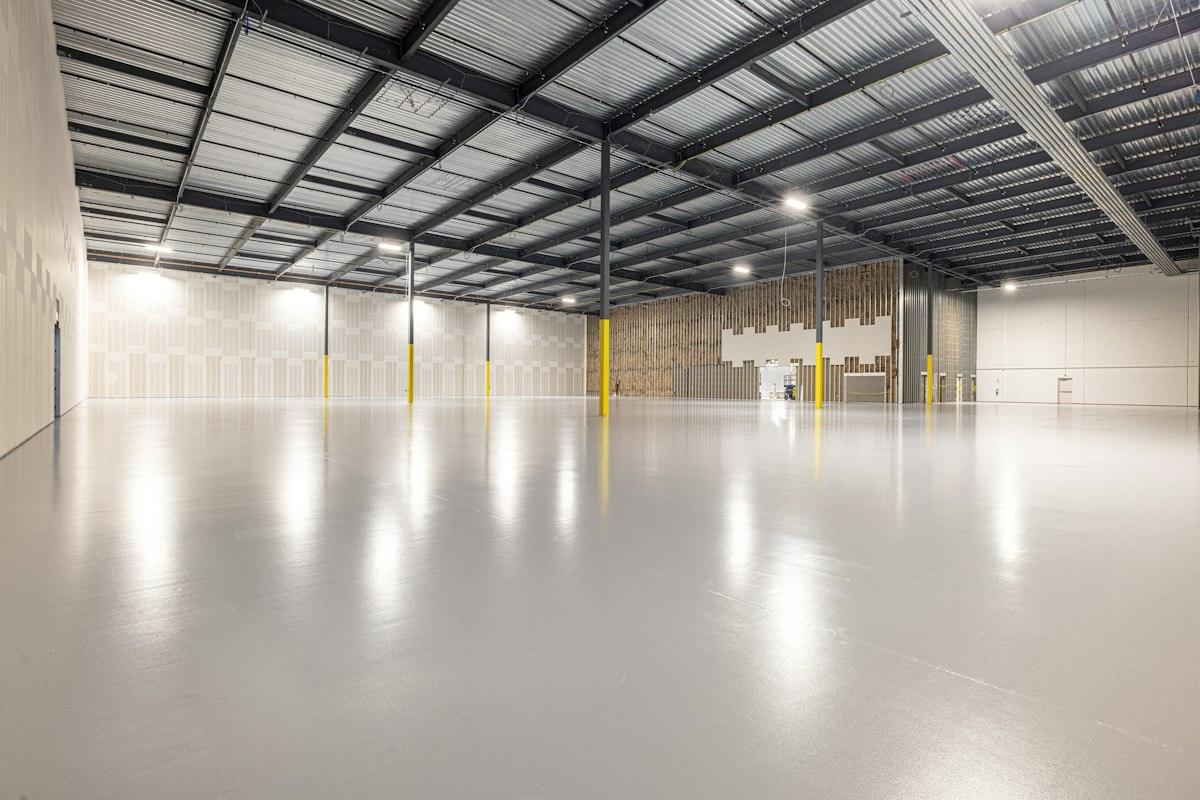
Both are epoxy and both come out glossy. The difference is thickness, and thickness decides what load the floor can carry.
What is the difference between self levelling epoxy and epoxy coating? A coating is thin, about 0.2 to 0.5 mm, and suits light loads. Self levelling at about 2 to 3 mm is flatter, takes impact and abrasion better, and suits factories, warehouses and forklift aisles.
What an epoxy coating is
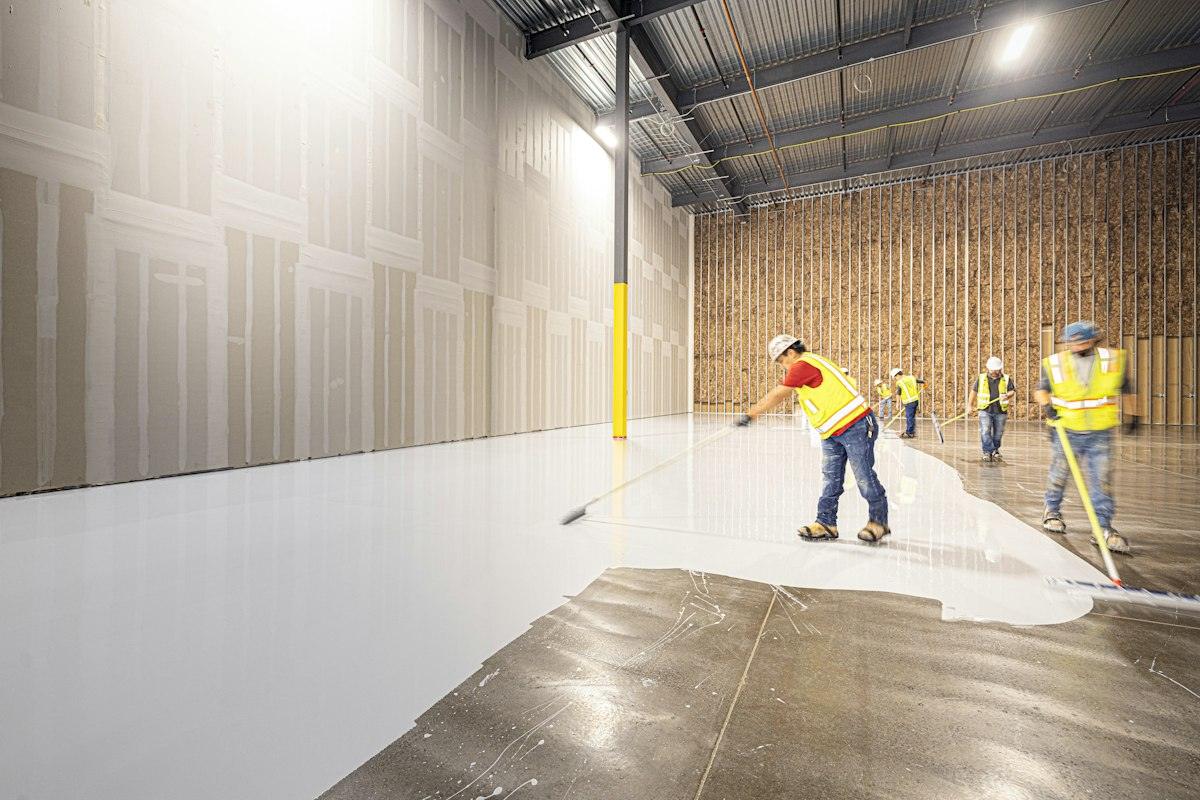
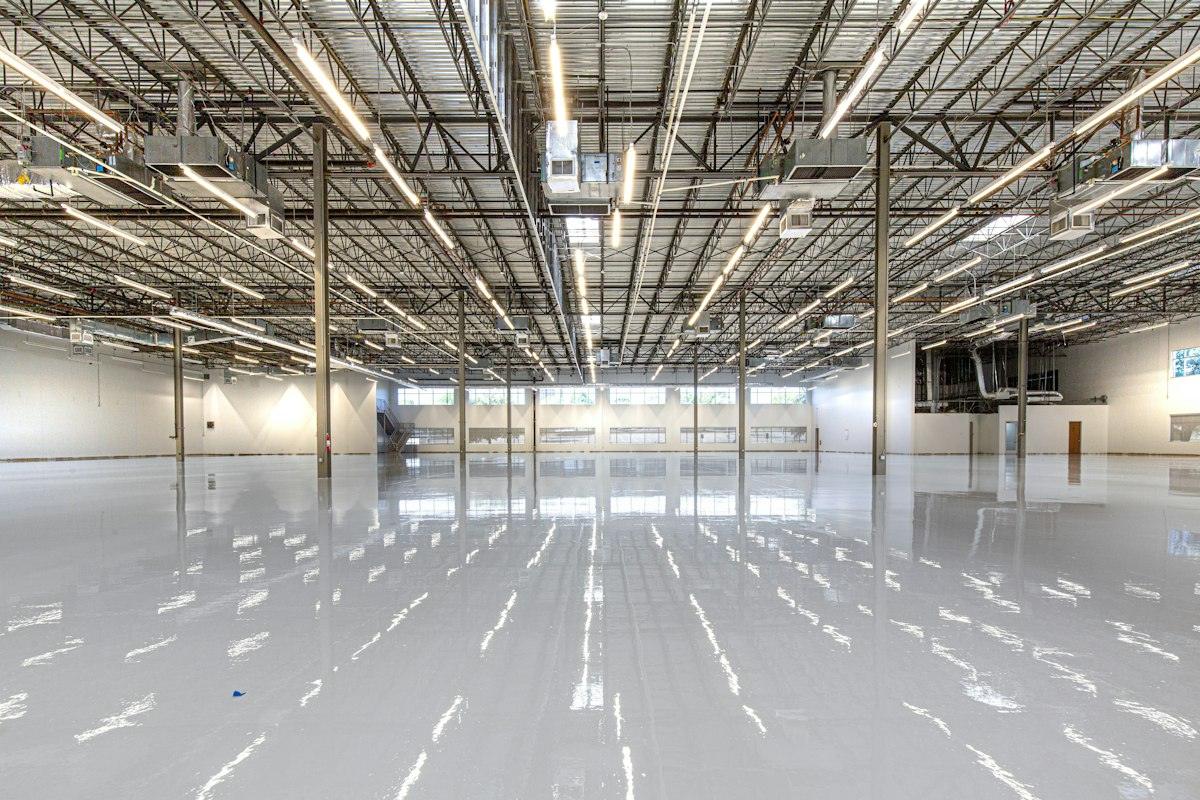
An epoxy coating is rolled on in two or more coats over a primer. Total thickness is usually about 0.2 to 0.5 mm. A layer that thin follows the contour of the slab beneath it, so an uneven surface still looks uneven once coated.
Coatings suit foot traffic and light trolleys, storage rooms, panel rooms, and floors whose main need is to be dust free and easy to clean.
What self levelling epoxy is
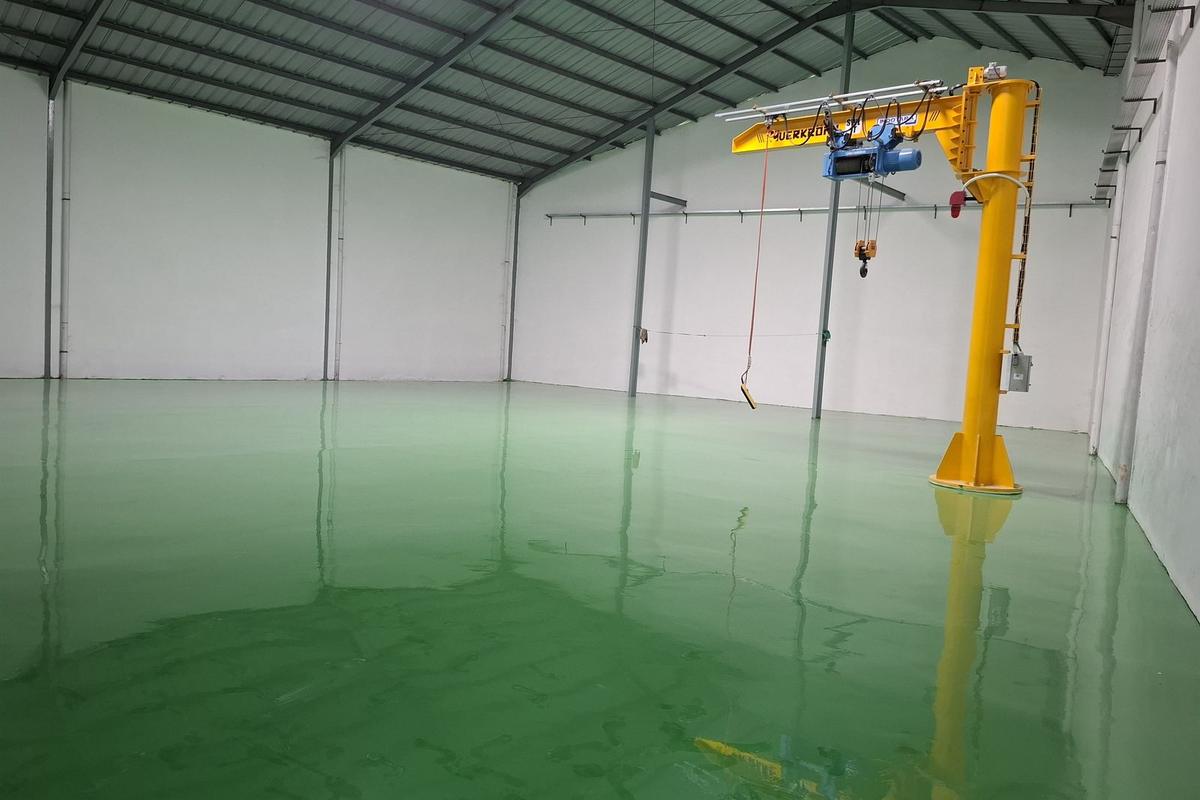
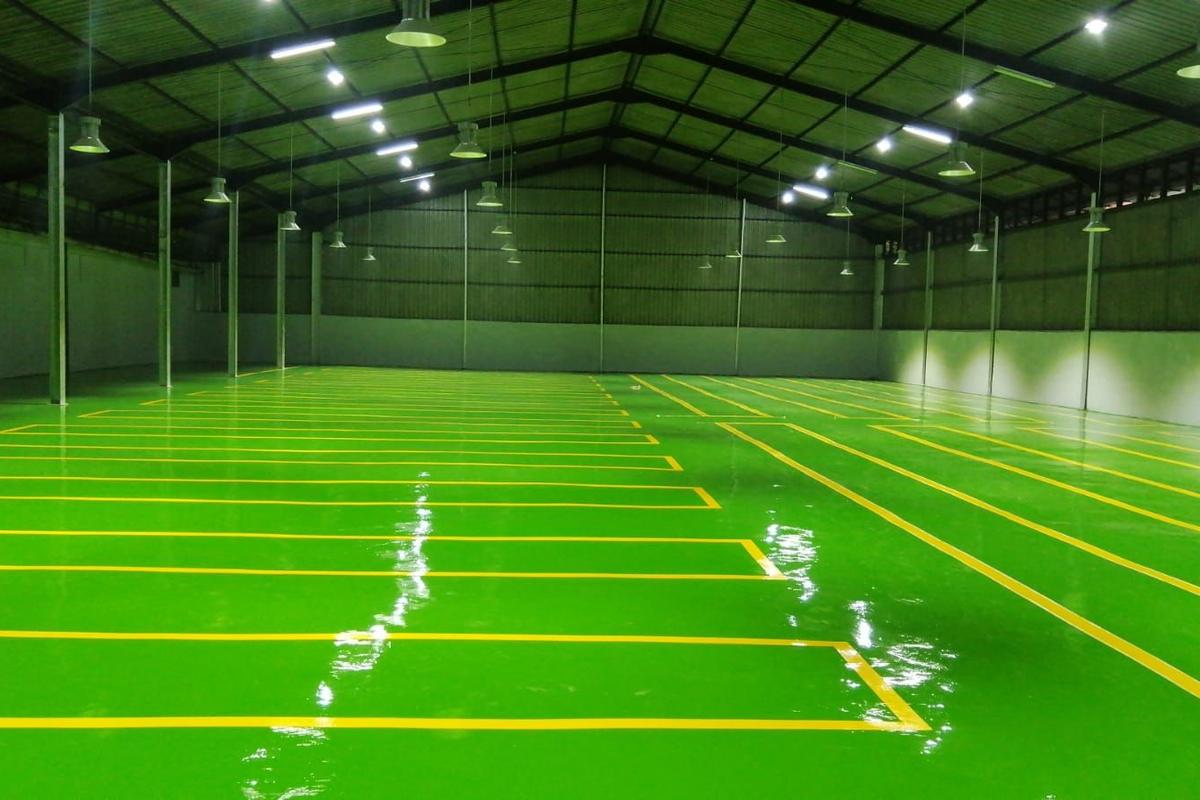
Self levelling (SL) is poured, spread with a notched trowel, then rolled with a spiked roller to release trapped air. The more fluid material flows and levels itself, giving a flat surface about 2 to 3 mm thick.
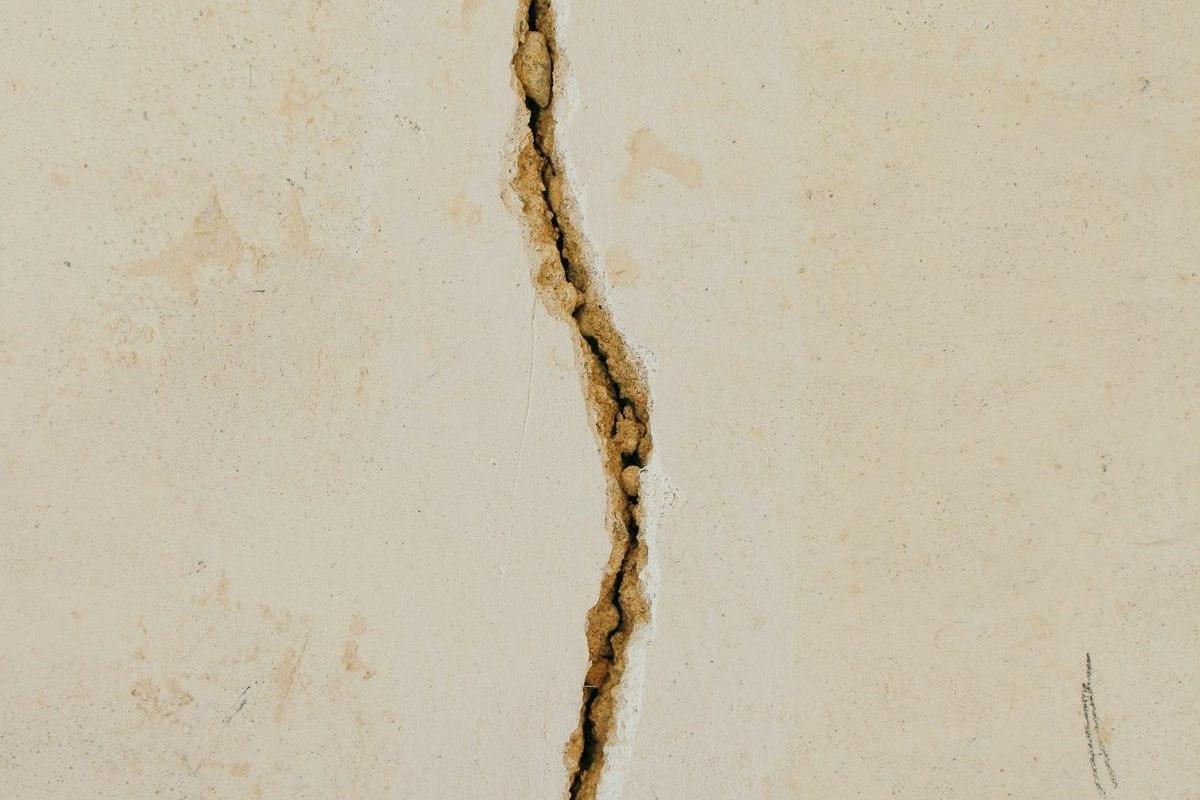
That thickness gives reserve against impact, wheel abrasion and point loads. SL also bridges hairline cracks and small defects in the slab, so the result is flat and seamless.
Side by side
- Thickness: coating about 0.2 to 0.5 mm, SL about 2 to 3 mm.
- Flatness: coating follows the slab, SL levels small defects.
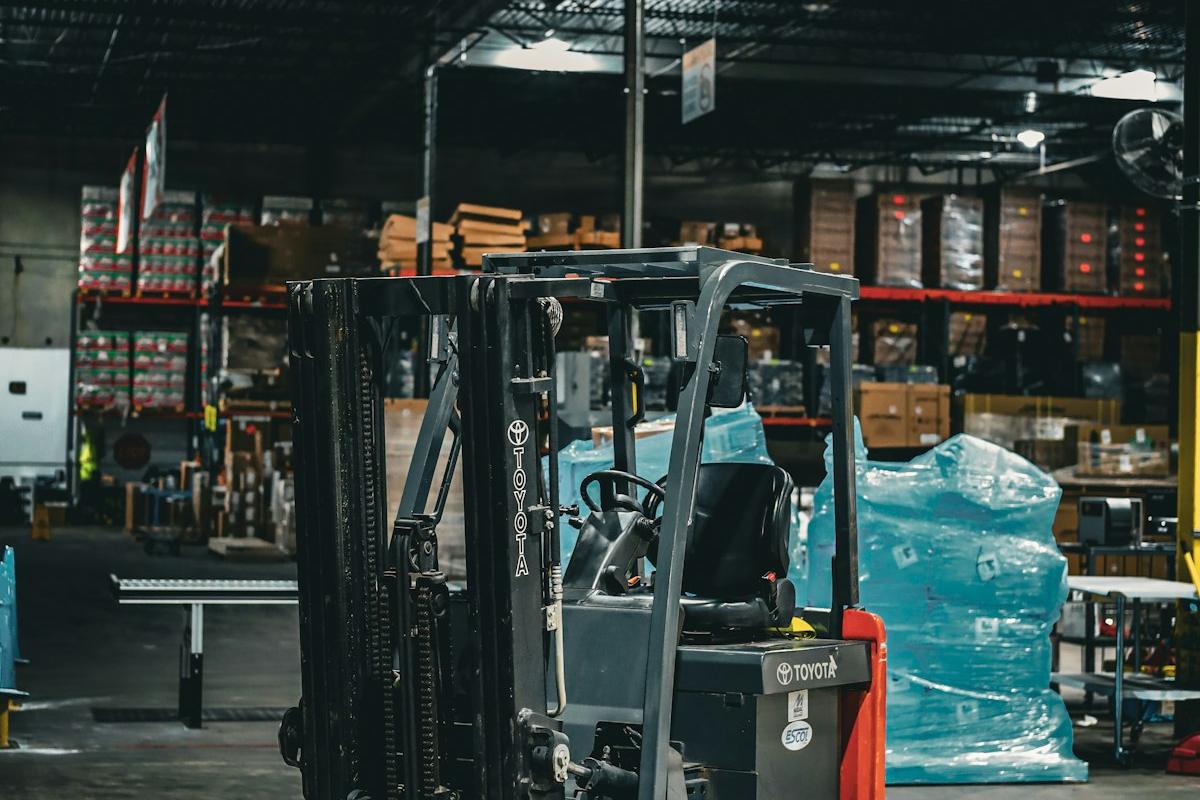
- Load: coating for foot traffic and trolleys, SL for forklifts, pallet jacks and machinery.
- Cost per metre: coating is lower because it uses far less material.
- Service life: SL lasts longer under load, because a thicker layer takes longer to wear through to the concrete.
How to choose
Start from the load, not the look. If forklifts, pallet jacks or loaded trolleys cross the area every day, SL is usually the cheaper choice over its life. If only people walk there and the floor mainly needs to stay clean and easy to maintain, a coating is enough.
One building often uses both: SL in production and forklift aisles, coating in light storage, corridors and panel rooms.