An epoxy floor that looks dull within a year has usually not been damaged by load. More often the cause is fine grit carried in on wheels and shoes and ground in every day like sandpaper.
How do you maintain an epoxy floor? Sweep or vacuum grit daily, mop with a pH neutral cleaner, put mats at the entrances, clean spills straight away, and renew the top coat when the gloss starts to go.
Why epoxy floors dull
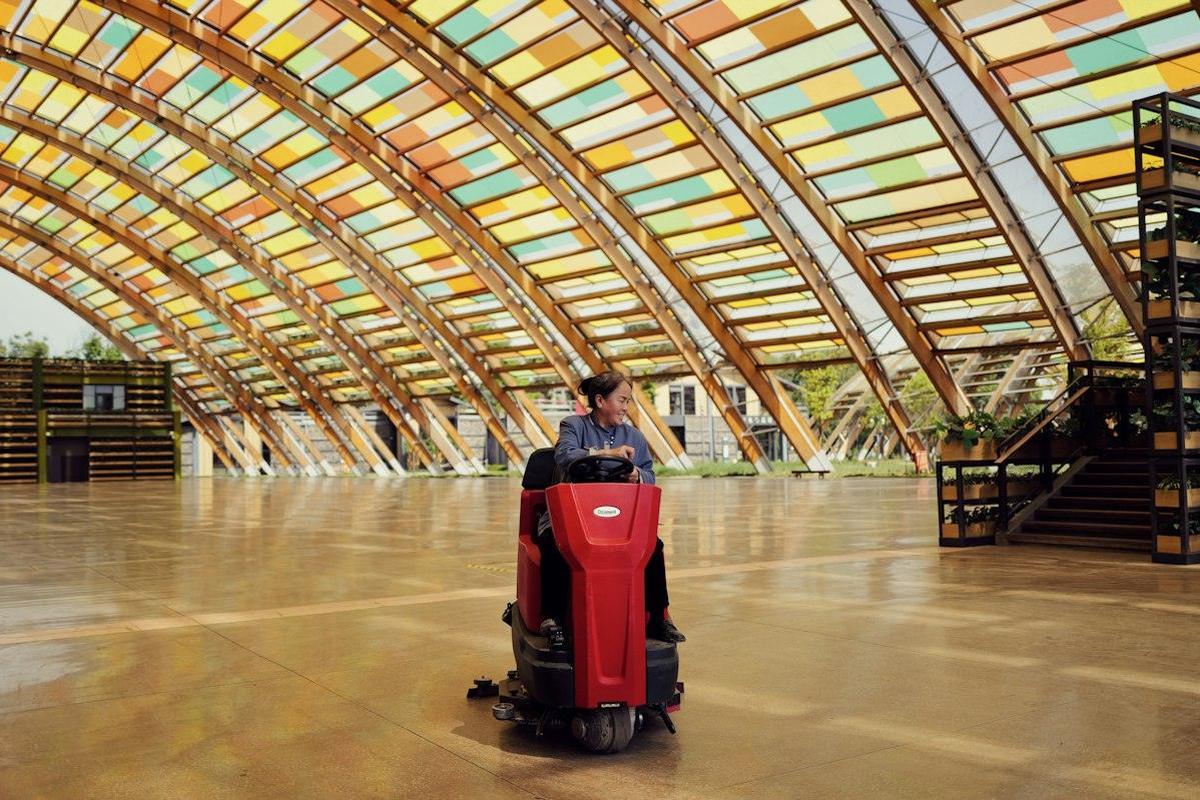
The gloss of epoxy comes from a very smooth surface. Grit ground under trolley and forklift wheels scratches that surface a little at a time. Fine scratches scatter reflected light, and the floor looks dull even though the coating is still thick.
The other cause is cleaners that are too harsh. Strong acids or alkalis used day after day can etch the surface and fade the colour.
Daily and weekly routine
- Daily: sweep or vacuum grit and dust, especially along wheel paths.
- Daily or weekly: mop, or run a scrubber with a soft pad and a pH neutral cleaner.
- Straight away: clean up oil, chemical and paint spills before they dry.
- Avoid: wire pads, steel brushes and strong solvent cleaners.
Preventing scratches in the first place
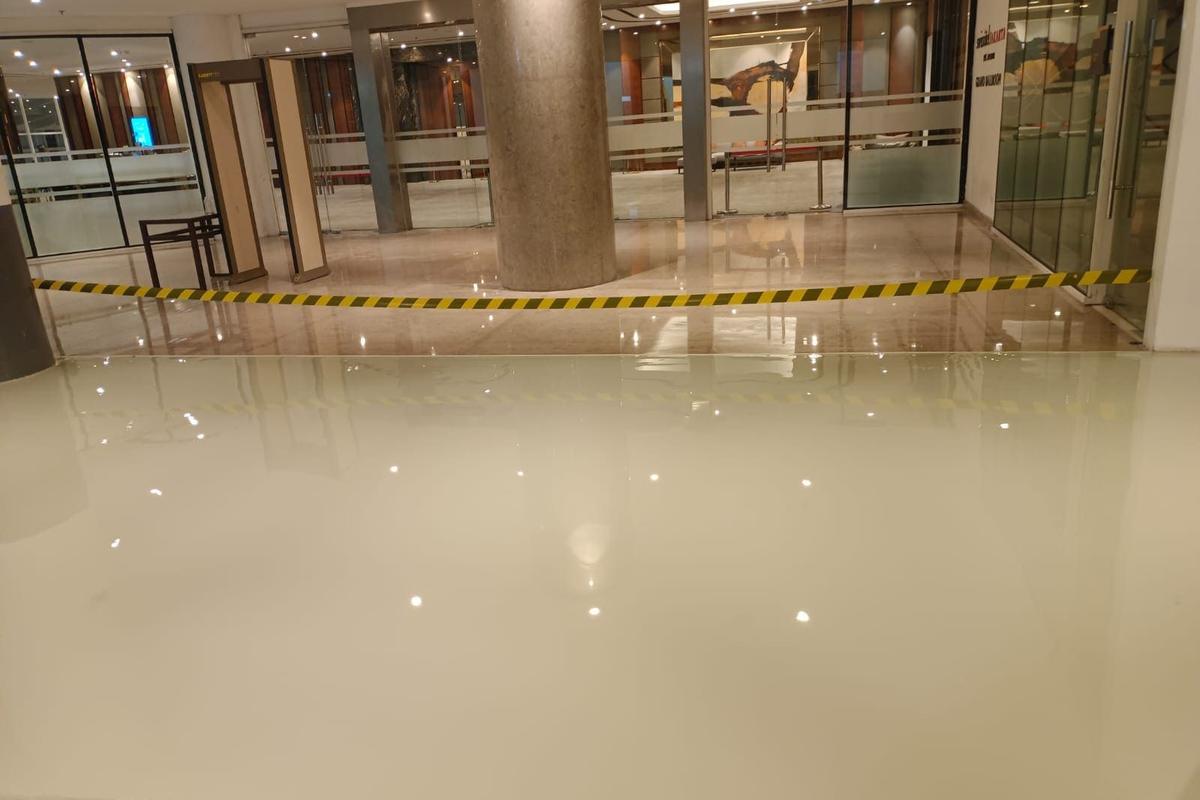
Mats at every entrance catch most grit before it reaches the floor. Pallets and heavy goods should be lifted, not dragged. Rack and table feet get rubber or felt pads, and cracked trolley wheels are replaced before they damage the floor.
When to renew the top coat
Once the gloss has gone evenly but the coating has not worn through to concrete, the floor does not need stripping. The surface is lightly sanded and given a new top coat. That is far quicker and cheaper than a full recoat, and works best when done before any area wears through.